
Journal
Joshua’s jots from journeys Along the Grain
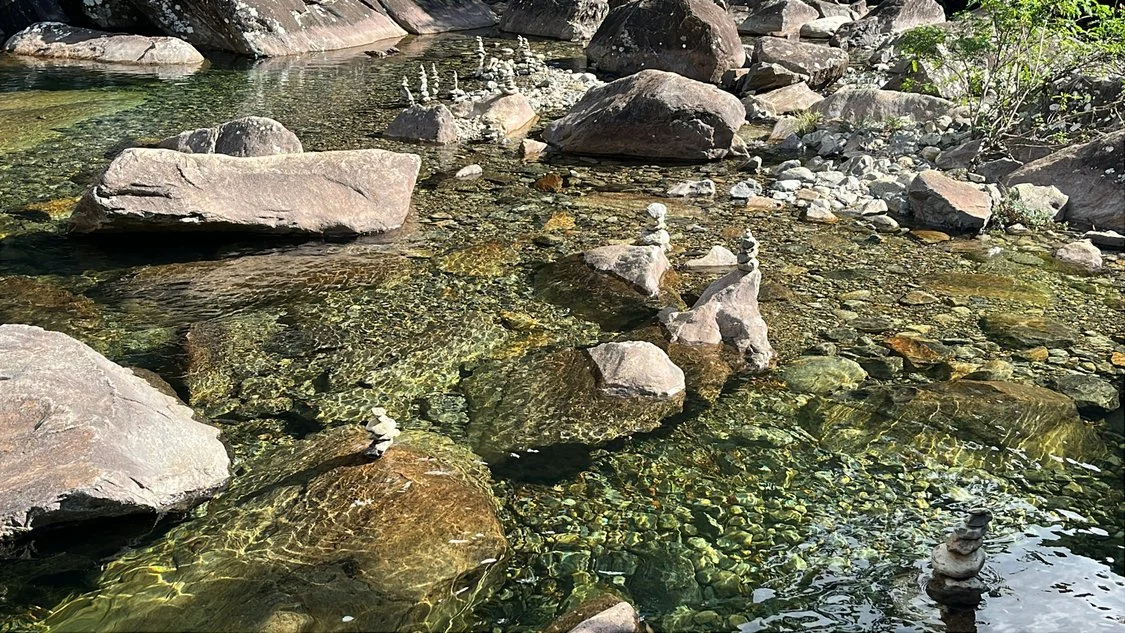
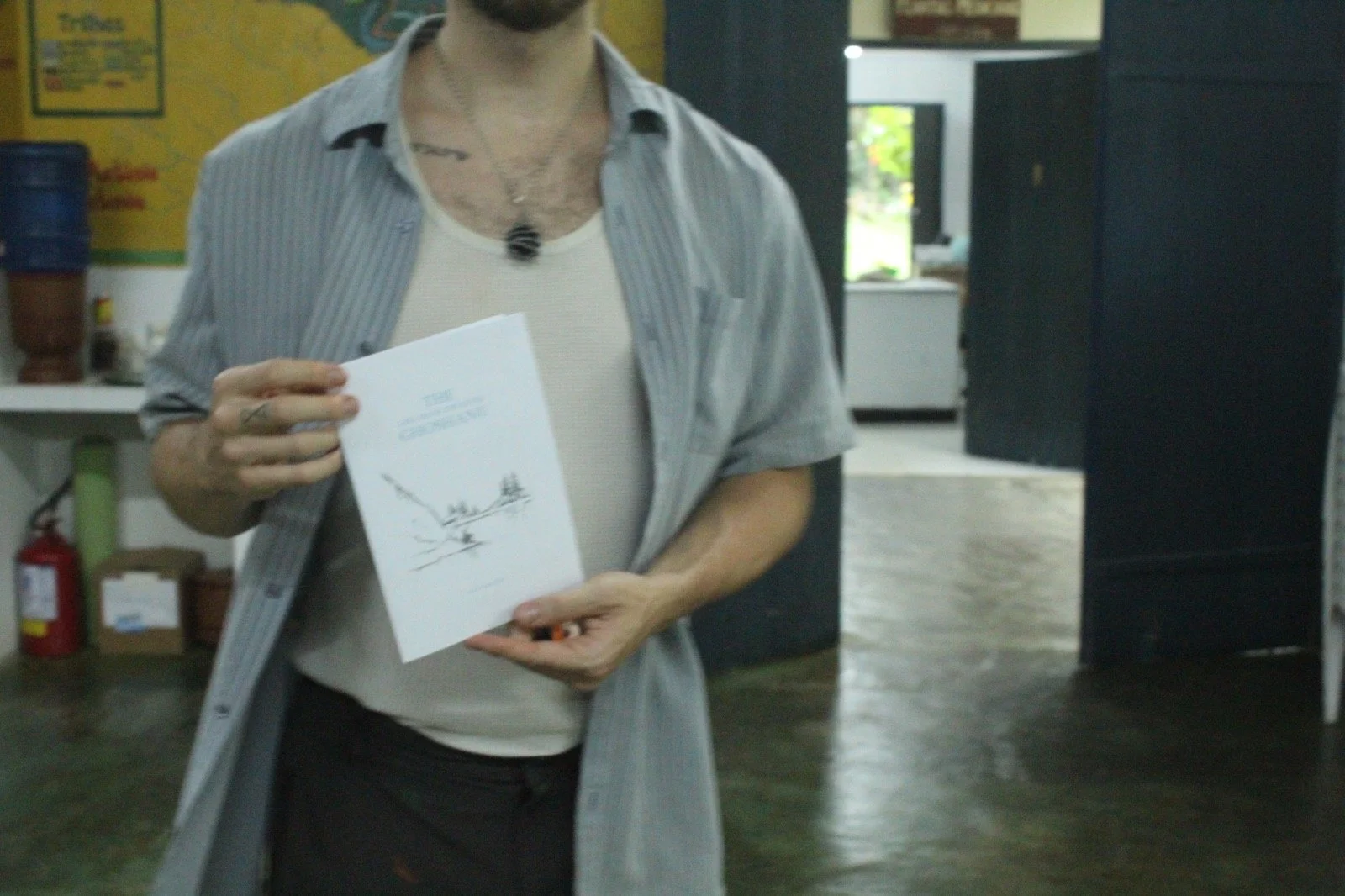
The Girl from the River Ghoshanu
Introduction
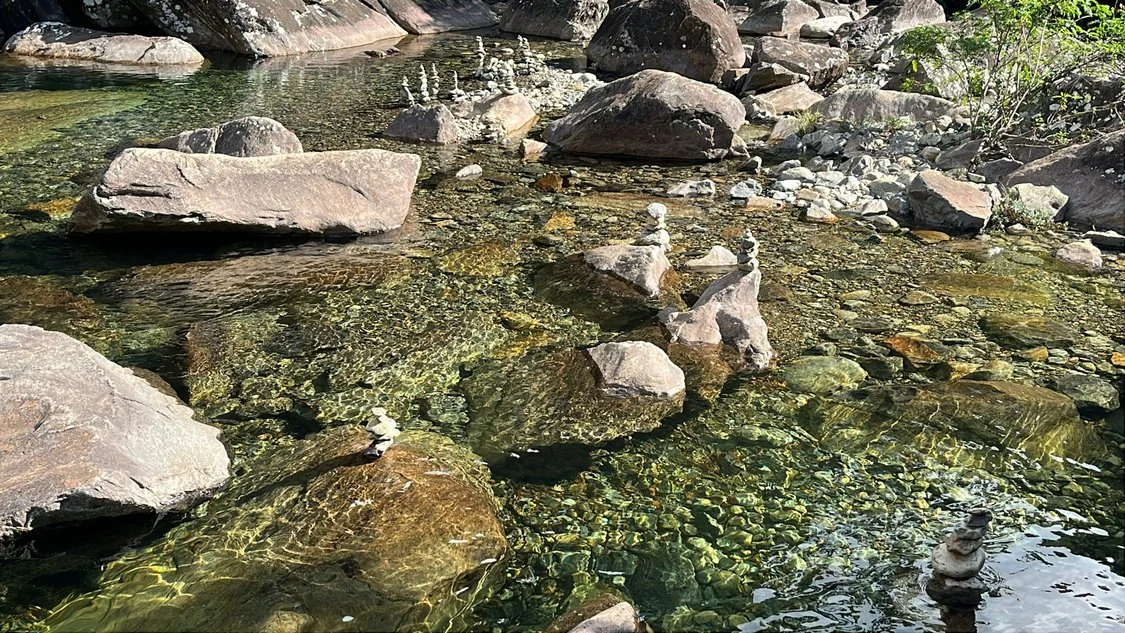
This story was written for all who may pass through the magical place that is Iracambi. Just as its winds caught my sails and changed the course of my soul, may it bring a new flavor to whatever wind you breathe in as well. This story emerged from nothing but the soil and sounds of what is now called the River Ghoshanu. One morning, Gabi and I were moving by this river, surrounded by its bugs and brambles. At the end of our movements, we sat, and for some reason, the name came to me. Naturally, this story began to unfold from the power hidden within that name.
Interwoven within it are many simple and complicated messages, which I will allow to whisper through the unspoken words and the lines left unsaid. It cannot be understood through the mind, but felt in the heart, once you’ve lived and experienced this place. So, this story is mainly for those who have become part of the tapestry of people that Iracambi is, but most importantly, it is for the children—the future leaders of this next generation—who will decide the beautiful direction in which we all grow.
✤
IN A TIME not too different from now, there lived a girl in the Atlantic rainforest. Her once-nomadic family had settled among a community of river dwellers. This young girl was called Ghosha, and from an early age, she suffered from a skin ailment that had disfigured her.
On difficult nights, her mother would tell stories of how their ancestors would wash in the river down by the tree nursery. If they ever fell ill or were troubled, they would walk down to the stream and bathe in the silence of the running water. As they allowed it to wash over them, without thinking, the answer to their problem would naturally flow into their minds. Ghosha’s ancestors understood that the land did not belong to them; instead, they belonged to the land. Because of this love and respect, the river returned its magic. However, in Ghosha’s time, after many years of outsiders coming to steal the mountain's precious metals, the river had become poisonous. The balance of the environment was lost, and the river could no longer communicate with its people.
Over time, the people continued to bathe and play in the river. Slowly changing their bodies from the inside out. But it wasn’t until strange health problems started appearing in their children that the disconnect truly began. Ghosha’s mother especially loved the river deeply. When Ghosha was born, she was found to have leprosy and was later discovered to be infertile. This confusion and fear of what was happening led the people away from the rivers. They began relying on the outsiders for water, which was provided in small plastic bottles.
More and more, Ghosha started seeing these empty plastic bottles scattered around the riverbank. One day, in her childlike curiosity, she went down to the river to watch the passing water, slowly collecting the little plastic bottles to use as lights in her room later. As she was picking up one of the plastic bottles near the water, she noticed something floating along. Although she feared the river, something else took over, and she reached in. With her arm outstretched and her body as far away as possible, she grasped for the object.
As she did, the sunlight bounced off the rippling waters, reflecting a golden shine from the object. It lightly stopped in her palm as she scooped it out. Letting the water fall from her grip, it revealed some sort of golden shell. She squatted closer to the river and held the shell up to the sun. The bright midday sky god shone straight through, revealing the intricate details of what was once a cicada.
In wonder, she simply sat there, the sounds of an ancient river passing through her, turning the shell around to watch the light play with its golden nature. The smell of feijão caught her in a passing wind, and she hopped up, excited to show her mother her new friend.
Ghosha, reluctant to tell her mum where she had found the shell, tugged at the back of her mum’s dress and simply opened her palms.
“Veja, Mai!”
Her mum, in shock, dropped a dish she was washing, and it shattered in the sink. She turned to Ghosha, her eyes wide, and began telling her stories of the times when these shells flourished near the river. They came from old cicadas who had outgrown the bodies they were in, answering the sky’s call to a new place. The cicadas would nest on the large trees near the river and undergo a long, painful—but necessary—process to shed their old shells.
While her mum spoke, Ghosha’s grandma, seated in the corner of the room, looked up from her weaving. She smiled softly and whispered, “Anu,” before returning to the bamboo basket in her lap.
Her mum continued, telling her how much work the community had done to try to restore the waters. But fear of illness had become stronger than their trust in nature. “A long time ago, the cicadas stopped coming to the trees,” her mum said, her voice tinged with sadness. “That’s why it’s such a surprise that you showed me one.” She fell silent, her eyes distant, lost in thought.
Ghosha’s grandma jumped in, her voice warm and wise. “Every full moon, they used to break out of their old shells and fly away. No one quite knew why, but the farmers always seemed to understand.” Her mum nodded in agreement.
“Ghosha, let me see,” her grandma said, calling her over.
Ghosha skipped across the room, sliding on the wooden floor in her socks and pretending to drop the shell as she came to a stop. She sat cross-legged beneath her grandma and looked up, opening her palms.
“Wow, Ghosha, this is special. It chose you. There’s a new wind in this place, and it chose you.”
Her grandma carefully picked up the shell, threaded a piece of string through it, and hooked it around Ghosha’s neck. Leaning in close, she whispered, “On the full moon, go to the large rocks where your father used to take you. Watch for the fireflies.”
Ghosha nodded, smiling widely, then darted outside, giggling as she raced back to her usual morning mischiefs.
Her mum stood still, her expression unreadable, before turning to her grandma. “What did you say? Don’t get her lost in her imagination again,” she said in a stern, unwilling tone.
Her grandma simply smiled, her hands moving deftly over the bamboo, and carried on weaving.
Ghosha trotted back to the river and sat there, obsessively watching every object that drifted along in the water. The sun dipped below the horizon, and her eyes grew heavy with weariness. Before getting up to head home, she held the shell necklace in her palm, watching as the wind played with it.
Suddenly, the wind picked up, whistling sharply past her ears. No clear words formed, but a distant voice quickly turned her head.
Five sunsets passed, and the family sat together at the table, passing around and cutting the mangos they had collected from the tree outside. Ghosha had devoured an entire mango, her face sticky and shining with remnants of breakfast. Her grandma leaned over and whispered to her, “Querida Ghosha, do you remember what will light the sky tonight?”
“A LUA!” she shouted with excitement.
Each morning, Ghosha ran down to the stream to watch the passing currents. But this morning felt different. The water seemed far more powerful, flooding through the earth with an intense and almost menacing strength. She stepped back cautiously, awestruck by its force.
As always, she checked the surrounding trees, searching for something extraordinary. To her disappointment, it was the same bugs and bark as before. Sighing, Ghosha returned to her familiar spot by the river and closed her eyes.
Instantly, the sound of the cicadas erupted into a symphony. The rattling vibrations coursed through her, a pulsing rhythm that filled the air. The crashing of the river joined in, roaring as it surged over rocks and twisted around every bend. The wind, hearing this lively concert, swept through the trees, its song whistling and sighing through the leaves.
Ghosha smiled.
The sun had gone down, leaving the sky to cradle a full, beaming moon in its darkness. Ghosha adjusted her place on the large rock, shifting until she found the perfect grooves to settle into. She leaned back, letting the rock hold her, and stayed there for a while, silent and mesmerised by the moving sky above. The winds are strong, a thought passed through her mind. Suddenly, she sat up, her senses sharpening as a strange presence seemed to envelop her surroundings. Her eyes adjusted to the darkness, scanning all the way to the trees that bordered the magical rocks. Then, from the tall grasses, a sea of fireflies emerged, glowing in unison like a living constellation.
Her jaw dropped in awe as she looked over her shoulder. The fireflies painted the rocks and trees with vibrant light, some even fluttering close enough to her to weave through her curls. Her hair began to lift slightly, charged with a static energy she couldn’t explain. Slowly, she raised her hands and began to trace patterns in the air, pretending to paint in the wind. The fireflies playfully joined her dance, flitting around her fingers while skillfully avoiding her touch. Then, without warning, they collectively rose upward. As they ascended toward the full moon, the shell on her necklace began to glow. The golden light grew brighter, and the shell followed the fireflies upward. Despite its tiny size—no heavier than a grain of rice—it seemed to possess great power. As the shell rose, so did Ghosha. She felt herself lifted off the ground, her body weightless, carried by an unseen force.
The wind surged around her, and all the fireflies suddenly vanished into the sea of darkness. With a powerful gust, Ghosha was swept along the current of air, her golden shell leading the way. She didn’t need her legs to move; the wind carried her effortlessly, skipping her across rocks and soil like a heron gliding over water.
She flew down the steep path that led to the rocks, the tall grasses parting before her as if making way. Snakes slithered back into their holes, and any fear she had melted away in the pure magic of it all. Her eyes remained fixed on the glowing shell, which seemed to wink at the moon as it guided her.
Ghosha ducked and dodged as the wind pulled her through the trees. Passing under a towering Jatobá, she tilted her head upward, her wide eyes trying to see where she was headed. The riverbank loomed closer and closer. Before she could prepare herself, the wind launched her off a small mound of earth, sending her soaring through the air.
For a moment, her silhouette painted itself against the glowing full moon. Bugs below watched the scene in awe, cheering in their own small, buzzing ways.
The wind caught her fall gently, guiding her into the river. She hit the water with a splash, her body sinking like an anchor to the bottom.
Baddum. Baddum.
Her heart pounded faster and faster. Her mind became a torrent of ancestral thoughts and stories. Ghosha had never learned to swim. Arms flailing, legs kicking desperately, she tried to find her way, but the currents were too strong.
The undercurrents spun her body, tossing her in every direction until she lost all sense of up or down. She hit a rock, and in that instant, her panic turned to eerie silence. A wave of calm washed over her, and clarity poured into her mind. Ghosha focused her attention upward, toward the distorted rippling image of the moon. As she did, her necklace began to glow with even greater intensity. The golden light seemed to reach for the moon, pulling her upward with it. Slowly, she felt herself rising from the riverbed. Her lungs burned, her chest throbbed, and her heart pounded harder than ever. Just as she thought she could hold her breath no longer, she broke the surface, gasping for air.
The bugs around the river cheered again in their strange, joyful sounds. The current had calmed, carrying her gently along. She pulled herself onto a nearby rock, collapsing onto her back, panting, trying to catch her breath.
Beat.
“Tudo bem?” said a deep voice behind her.
Startled, Ghosha whipped her head around. Standing in the river was the silhouette of a large heron, perfectly balanced on one leg, its form framed by the moonlight.
“Ola, Ghosha,” the heron said.
“Who are you?” she asked, her voice trembling with wonder and exhaustion. The heron did not answer right away. It stood still, letting the wind speak for it, the gusts whistling softly in Ghosha’s ears. After what felt like an eternity, the heron finally spoke, its voice rich with purpose and intent.
“I… am… Anu,” the heron said, its voice steady and powerful. “The Guardian of this river. For thousands of years, I have protected these waters and the surrounding climate. I hold a pivotal role in maintaining the delicate balance of nature.”
“How?” Ghosha asked, her eyes wide and glowing like the moon above. “Well,” Anu began, “my favourite thing to do, after enjoying a delightful meal of cicada shells, is to fly to the Pico de Graminha, perch at the stream’s source, and… well, poo into it.” Ghosha’s jaw dropped.
“I don’t know exactly how it works,” Anu continued, “but the nutrients from my waste enrich the riverbed, transforming into minerals over time. The power of flowing water, combined with the magnetic pull of the earth, forms a precious metal called bauxite. This mineral strengthens the soil and helps it absorb rainfall, regulating the amount of water that flows down the mountain. Without it—especially in the rainy season—the earth cannot manage the rain, and the rivers swell too high and too quickly. This imbalance disrupts the entire environment.”
“Wow,” Ghosha breathed. They sat in silence for a moment, listening to the gentle rhythm of the water.
“But,” Anu added, “there’s something even more important to me. When the rivers are thrown out of balance, the trees nearby suffer. Their sap disappears or washes away too soon, and the cicadas can no longer feed on it. Without that sap, they leave for other places, and I no longer find their tasty shells. “And, let me tell you, when I’m hungry, I get desperate. Like that time I saw a round, shiny object floating in the river. I thought it was food, so I snatched it up and swallowed it whole—only to realize it wasn’t of this world. It nearly killed me.”
“You mean… a plastic bottle lid?” Ghosha asked, pulling one from her pocket. Anu tilted its head. “So that’s what they’re called…” They fell into a thoughtful silence for several passing winds. Anu finally broke it, as Ghosha gazed up at the moon, “The workings of nature are so delicately balanced” Anu croaked. “In the same way I have my part to play in this world… so do you. You already know what it is. But if the world ever tries to make you forget, come and listen to the song this river sings.”
“What can we do to help?!” Ghosha asked, springing to her feet with excitement. “You already have all the answers within you,” Anu said. Then, with a majestic unfolding of its wings, the heron lifted effortlessly into the air, catching a passing wind.
Ghosha watched in awe as it disappeared into the night. She fell back against the riverbank, laughing, her heart full and the moonlight dancing in her eyes.
“Wow…”
The next morning at breakfast, her mother came into the kitchen and froze mid-step.
“Ghosha…” she stammered. “Your… your skin!”
Ghosha looked down, and her eyes widened. Her leprosy had completely healed. Her skin was smooth, radiant, and clear as the full moon. As she moved her arms, it gleamed with a watery shine, like the river itself had kissed her.
…
Years later, when Ghosha had children of her own, she told them the story of Anu. Her tales inspired not only her children but their friends and their community. Even after Ghosha returned to nature, her descendants carried on her stories, passing them down from generation to generation.
Eventually, the story became part of the teachings at the local eco-school. One day, a group of students from the school visited the river to place a sign in its honour, ensuring its name would endure for generations to come.
They called it Ghoshanu.
After the story was told, the children carefully gathered up any waste they had brought, preparing for their next adventure to the mountain. One girl at the back of the group noticed a small plastic bottle lid near a tree. She hopped over to pick it up, and as she stood, her eye caught something golden hanging on the tree’s bark. It was round, delicate, and shimmering a golden light. She smiled at its natural beauty and paused, letting the silence of the moment wash over her. Then, with quiet reverence, she bowed to the river and skipped back to join her friends.
“Where did you go?” one of them asked.
Proudly, she replied, “I was just doing my part.”
The Creek where Illyria settled
She lay there on a lilypad in the middle of a creek. Feeling the wet slippery surface on her back. Gleaming as beads of water sprayed above her. It was the little pond dragons again. Carymites she called them. They’d often come near and play around her. Diving into the water to fly just over her ankles. They didn’t have any scales but an oily iridescent skin. Moving so fast she never quite got a clear picture of what they looked like, except for their emerald eyes that cut through the sunlight with snarling smiles.
This was a place to get lost in, full of natural distractions. The Poet returned as often as Great Ma let her. It was quiet, in terms of the usual husoul tremor, but buzzing with natural delight. Ferrakins rustling in the forest behind her. Dust bunnies giggled as they collected in the house behind.
She never remembered their names. But that was probably best, she wasn’t all too good with names.
She tugged on the vine that she’d left to rest over her shoulder. It pulled her slowly back to the dock. The Carymites came along cackling, all excitable, to help lift her up. As The Poet climbed onto the wooden dock a sudden squark came from above. Jolting, her head darted upwards. The nerves settled when she realised it was only the headless bird again. Slowly walking towards the house she let the creek water drip down her and onto her bare feet that gripped the grooves beneath. Reaching up to the side of the wooden house she began to climb the pitons she’d drilled in, then onto the roof. There was a door small enough for her body on the crown of her house.
She had built this place a long time ago with these travelling artists from Yamato. What a time. No nails. Simple cuts and joins. Magically assembled. said Self.
Opening the door with her toes she then jumped with precision from the roof onto the wooden ceiling beams. Swung across to the other side of the house. Dangling for a moment with her arms fully stretched out. She stopped right above her bed. Waiting until they became too weak to hold on anymore. Tucked her knees in and let go of the beam. Falling towards the bed watching her curly Moorish hair trail behind.
Her back hit the bed but she didn’t feel a thing.
She slept on a cloud.
The forest friends came to greet her. Brackle was the first. The newborn deer she’d rescued from the hunters trap in the forest. Brackle was one of those berry deers. Off the end of her antlers grew the tiniest berries that changed with the season. If you only picked a few, the antlers would never be bare.
She picked three from the top as Brackle trotted over and rubbed her head against her leg. She tickled her chin and felt that warmth that was throughout her dwelling. So focused on the berries she didn’t even see the boom birds playing hide and seek behind Brackle’s ear. They appeared echoing sounds reminiscent of Harlem streets and Kentish towns. It was a sound she’d never heard before. But she recognized the words and drums of water dragons. That was the thing with these boom birds. They held the sounds within them from many lifetimes ago. You’d never know the sound but deep down it resonated. It was something new each day. That was if they chose to grace you with their presence. They were the most muted looking creatures on the outside, but what was on the inside was more colourful than the whole universe.
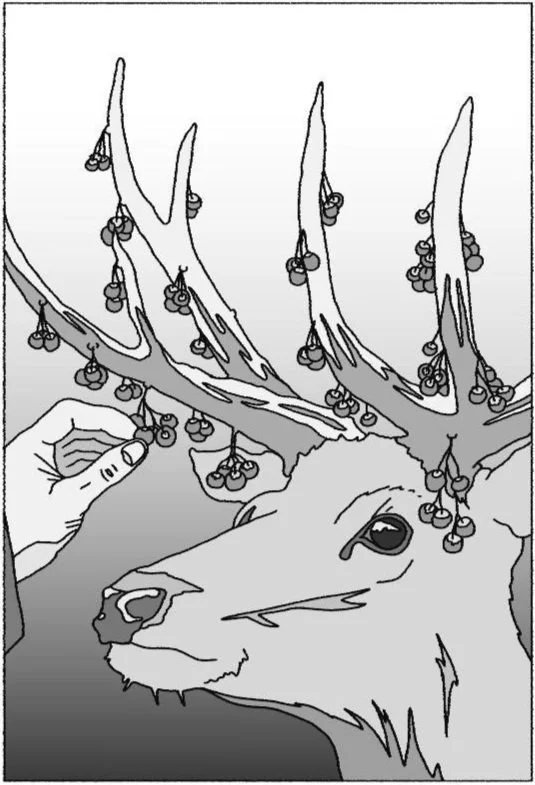
~ Illyria reaching for Brackle’s berries ~
With the three berries in her hand, she walked over to her mandrake cup on the other side of the room. It was made from the wood of one of the oldest trees in the land. Carved by a local Wu. With each drink it grew in wisdom. She blew a breath of intent towards the glass beaker on the window sill. The sunlight hit it and it began to boil. Whilst she waited, she dropped the berries in the cup and went to squat on the dock outside. Sitting in her silence. Slowly scanning around the beauty that was home. The occasional ripples that collaborated with each other on the lake. The wind blowing through the trees. The sound of rustling leaves. The sight of the lily lotus passing from bank to bank. Her breathing was natural and calm. Picking up a stone on the edge of the dock, she played with it in her fingers for a bit and rolled it in her palm. It’s cold smooth texture absorbed in her sensitive pores. She threw it into the creek just to watch it skip. It left forty three ripples, hit the edge of the bank and flew into the sun. When it disappeared from sight she went back inside.
She used one of the large broad leaves from the pot plant on the counter to carry the beaker. The clear steaming water poured in and she watched steadfast as the grey berries produced the most vibrant purple tea. She carried the cup back over to the bed holding the twig handle. This tiny branch could hold the weight of the world. Brackle and the birds had nestled around the bed. She picked up the book left open on the side from last night and plopped it on the bed. The creatures watched with wide eyes as the origami butterflies flew out of the pages as it landed. This was a weird book. She’d found it on her travels up the snowy mountain, the highest one in her land.
It had taken her a whole week to reach the top. But she was in no rush so that might have been why. Stopping to take note of all the new plants and mountain beings she came across. She hadn’t seen another husoul in a couple days, until she was about halfway up the mountain. You could tell because of the fire buffalo that grazed in the heath just below. That was as high as their bodies allowed them to go before their fur distinguished. Whilst taking a break on the side of a snowy path one walked past. She was squatting next to a tree dropping walnuts from her hand into her mouth. It was the perfect angle for the lapping flames of its fur to create beautiful shadows and forms on the entrance of a cave opposite. Curiosity stood up and followed the shadows.
As she stepped in it was magically silent. All she could hear was the careful tearing of folded paper behind the first corner. Squatted on the floor was a small old man in front of a pile of books. What calls a man to the mountains alone? She walked up not saying a word and squatted next to him watching the care and poise it took to thread a needle with spider silk. What seemed like paper was actually planks of wood that the man could tear with ease. He noticed her but didn’t break his flow. The smell of the purple berry tea came back again. She could feel it roaring around him. She understood and watched.
Once all the thin slats were stacked together, he held them gently and dropped them from his grip onto the floor to line them up. Behind him in between the pillars of books was a rock dragon blending into the wall. The man, holding the slabs, mindfully passed the stack over to the dragon who opened its jaw. It fit perfectly and the dragon's teeth managed to hold it in place without puncturing it at all. Coming out of his squat he crawled on all fours over to the pyramid stack of spider silk thread. He plucked free the top end and pulled the thread over to the slab stack. She watched as the pyramid turned and a deep blue glow emerged. The dragon held the stack flat. He stood in a slightly knee-bent stance. He is the mountain. Unmovable.
He knocked four holes through the spine of the stack. The purple glow disappeared, she could smell the silence, and it began to emanate from his fingertips. She shuffled around and watched as he dangled the silk over one of the holes. Something shifted in her belly. She felt the cave walls get darker and the only light beaming was from the man. He took one deep breath that seemed to come from the depths of the mountain. A gust of wind passed through the cave and almost knocked her over. From the silence came electricity. He dropped the silk with complete accuracy; it passed through the first hole and he caught it on the underside. Pulled it round and gave a sharp whistle and the dragon rotated its jaw 180 degrees. He dropped the thread again and it fell through perfectly. With each drop he’d give the thread a slight tug, it would pull the stack snuggly together. Caught in a trance from his eight arm dance she didn’t even notice he’d finished binding. He used the razor edge of the dragon's tail to cut the thread and it recoiled. Returning to his squat, he dipped the two ends of thread in a small vile attached to his belt. Pushing the two ends together, sparks bounced off and with one magnetic swoosh they became one. The dragon opened its jaws and the bound book fell into his palms. He caught it by the bound edge and let the pages flop and fall. The wooden pages had turned into a water like substance in his grip. He followed the gravity of the book's movement until it came to a dead hang. He held it there for a few seconds as the pages blew in the gentle breeze coming from the entrance. He smiled, closed his eyes and bowed his head.
The book mirrored the movement of the trees that swayed outside. When the Poet returned her gaze from the leaves she saw he had his hands held out with the book in them stretched towards her. She opened her palms and let the book fall in. It was weightless. Silence sang through the cave as their fingertips touched. With lips sealed he uttered the words she needed to hear. She nodded and slotted the book in her lilypad satchel.
Brackle nudged at her leg, waking her out of the inner world. She blew the dust off the book. Sitting there for a few moments. Simply breathing. The boom birds broke the silence with sounds from a land she recognised. Afu-ra. Sifting through her mind. She replayed and repeated the man’s words that echoed inside.
This is a weird book. It had no words on the pages. It was yet to be written. Forms only formed from the world of Wu Wei. Gripping the bun on her head with her left hand she plucked free the brush that was holding it together. Extending her arm out over the page, she took in one deep breath and then let the air fall from her lips. When it felt right she dipped it in her mushroom ink on the side table. Hovered over the page. Focused on the breath. Closed her eyes.
Waiting.
The creatures around the bed felt the same energy she felt with the enigmatic mountain man. The static returned. The stone she threw earlier appeared back in mind. Bouncing with ease. Loosening the grip of her brush she allowed it to fall and bounce off the page. The brush took charge and her eyes opened. These strokes and forms effortlessly emerged, becoming the nucleus for absolute attention. Swishing and swirling across the page. The pendulum fell back and forth. Slowing to almost a halt then regaining a venerated excitement that would dart across the page again. The tip of the brush would spritely kiss the fibres of the paper as it danced along its grain. This continued until a perfectly wonky line of kanji formed up the page. The excitement slowed. Illyria followed graciously.
As she felt the static die down, she lifted the brush and the boom birds sitting on top of Brackle started hopping up and down with excitement. She threw it up and one of them caught the brush in its slim heron-like beak and swallowed it whole. She blew a gentle breeze onto the ink, watching it dry instantly. Tracing the strokes with her finger replayed the man's voice in her head. The forms translated into pictures that painted the inside of her head. It echoed through until the 36mm roll was finished and she could find the words to comprehend. A silence boomed in the forest surrounding. The birds flew from the trees and frogs leaped out the creek.
The softest thing in the universe
Overcomes the hardest thing in the universe
That without substance can enter where there is no room
Hence I know the value of wu wei
Teaching without words
and work without doing
Are understood by very few